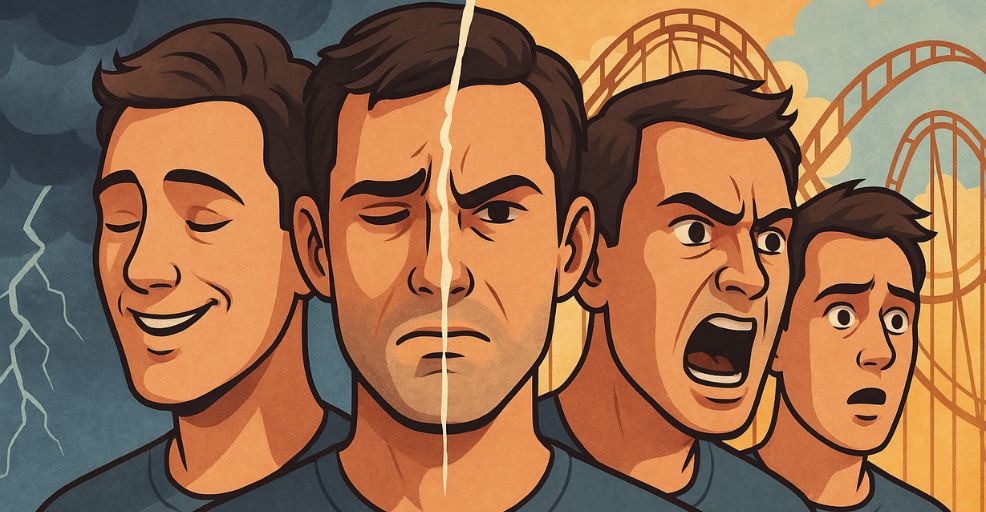
Ever had someone be mean to you one minute then the next they’re being nice like thanking or complimenting you for something?
It’s so quick that it makes your head spin! In fact, there’s a name for it. It’s called emotional whiplash.
It’s Called Whiplash for a Reason
Emotional whiplash is a psychological phenomenon when someone’s mood changes rapidly due to a mental disorder or if they are emotionally dysregulated. Why the person experiences that state of mind is not the subject of this post. The emphasis here is on the recipient and their experience.
If you’re like to read more about what causes it, this is a great article.
The name whiplash was chosen for the obvious reason. Whiplash in your neck means your neck snaps beyond its natural range. Emotional whiplash is also quick and jarring. It throws your nervous system beyond its comfortable limits.
The mood change of the whiplasher is so rapid that you don’t see it coming. One minute they’re mean or abusive, the next minute they’re nice or normal. In their words, their tone of voice and their demeanor. That’s why it can be so destabilizing to the receiver.
You’re left wondering, “What just happened?” while still reeling from the insults or verbal abuse while they have seemed to calm down. This can happen in a matter of seconds or minutes.
You’re Not Crazy!
They may have moved on emotionally, but you are still processing the interaction. The sudden shift can leave you feeling disoriented, as if you’re expected to instantly forget what just happened.
While they may have expressed their feelings and moved on, you’re still recovering from the impact of what was said. The result can feel like emotional whiplash: one moment you’re being hit with criticism, the next you’re expected to act as though nothing happened.
Over time, this pattern can create confusion, hypervigilance, and emotional exhaustion. You may find yourself bracing for impact, their next emotional swing, never quite sure which version of the person you’re going to encounter. Being around them is like walking on eggshells 24/7. You never know which version of them you will get.
Therefore being around them often or dealing with them is not healthy for you as your system is in a constant state of alert.
How to Deal with Them
Strong boundaries are the order of the day. Your best boundary is to reduce or remove contact with the person. If that’s not possible, set verbal boundaries.
Example: “I won’t continue conversations when you switch from calm to hostile suddenly. If that happens, I’ll step away for at least 24 hours and we can resume when we can talk respectfully.”
Or this: “I need to take care of myself. if you start making hurtful comments or blaming me during our talks, I’ll end the conversation and won’t respond until we’ve both had time to cool off.”
This protects you and gets you out of the situation. If the person can’t stop or respect your boundary, remove yourself physically. Walk away, go to another room, leave the building, do whatever you have to do.
By recommending you leave the area I am not suggesting the person may become physical with you, only you can assess that. Verbal aggression is enough to warrant removing yourself from the line of fire.
The After Effects
These head spinning moments create distance between you and the whiplasher over time because you never feel completely safe around them. It leaves you wondering if you can truly trust them to be civil around you. The answer is probably not.
If someone has this pattern then their best option is to get help with whatever underlying issue is causing it. Until they realize that they are the instigator and decide to take ownership of it, they will continue to behave this way. Since you have no way to know if they will ever seek help, it’s best to keep yourself safe by creating distance.
It’s not fair to you to be going about your day, minding your own business and suddenly get hit with Jekyll and Hyde. Which one are you getting not just today but at this moment? Since their demeanor can switch so rapidly, you never know.
The main thing to remember is that you are not imagining these rapid mood shifts. They are real. They can be so disconcerting that you can start to question if your experience was real, if this really happened. It did. You’re not crazy.
Moving On
More than likely the whiplasher won’t apologize for their behavior because they don’t see it or don’t care, creating further distance between you because no acknowledgement was made or repair attempted. Trying to force an apology probably won’t get the results you desire. So, it’s up to you to let it go.
That doesn’t mean don’t enforce a boundary, it means don’t let it ruin your day as best as you can. Try to remember that it’s nothing that you did. They are the one with the issue bleeding into your conversations with them.
Another thing to keep in mind that it often comes out of nowhere. You can’t see what the origin of their rapid mood change is. Sometimes there’s an obvious trigger like an upsetting phone call, other times there is none. You may have inadvertently said something to trigger them. But you have no way to know that until you find out.
That’s another reason their reactions can be so crazy making to the recipient. You’re left wondering, “What just happened?” when only they know. Or not. Oftentimes this behavior is so natural to them that they don’t have an answer as to why they do it. So, trying to get one will add to your confusion and probably leave you frustrated. Just know that this is how they are and you aren’t crazy. Create space between you two as best as you can.
We can love or like someone as a person but that doesn’t mean we always like their behavior. It’s ok to not like their behavior. You don’t have to put up with it or continually expose yourself to it.
Want some insight on your life? Then USE YOUR SUPERPOWER! YOUR INTUITION! It will give you the answers and never steer you wrong!
Want to learn how to develop your intuition? At your own pace? On your own time? For a steal of a deal? Then click this link!