Ever have a friend who uses bumper sticker psychology and says, “Think positive” when you’re nervous about something? Not only does it not help, it makes you feel worse because they’re not really listening to you. They’re diminishing your feelings. They’re glossing right over your nervousness and jumping right into their solution.
It’s a ‘Positive’ Blow Off
Or another common one: “Believe in yourself!” when you’re nervous or uncertain. If just believing in ourselves was the cure for lack of confidence or anxiety, we’d all be just fine! It’s shallow and empty disguised as supportive.
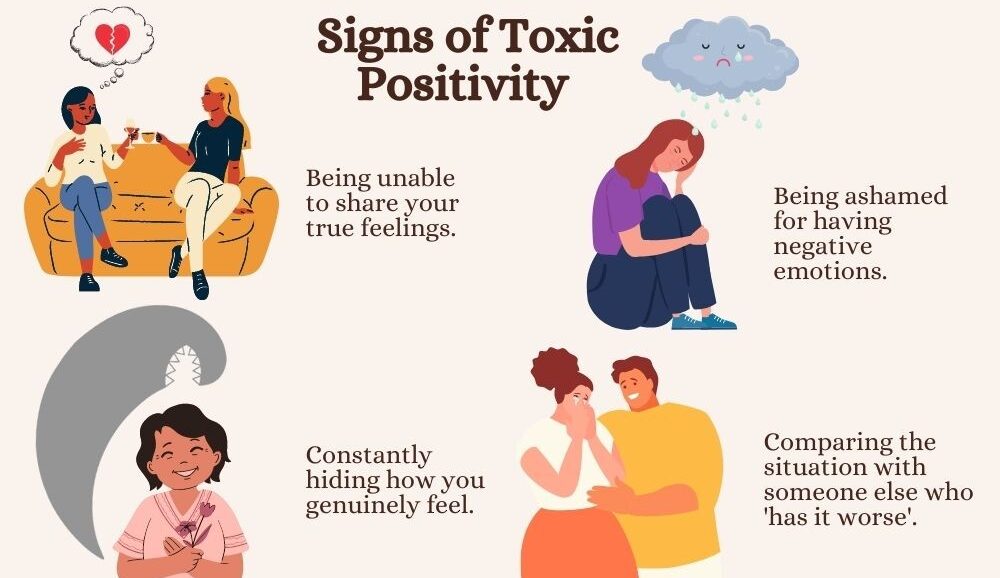
Those are some classic examples of what’s called toxic positivity. Toxic positivity is not just being optimistic. It’s when positive statements are used in a way that dismisses, overrides or doesn’t address difficult emotions.
“Don’t worry” and “You’ll be fine” are two more common ones that are dished out when someone doesn’t want to dig deep and feel your pain or other emotions. What they’re saying is their comfort is more important than yours. As a result, it can feel hurtful because your feelings aren’t addressed or validated.
When we are nervous or in pain, we want to be seen, acknowledged, and validated. We don’t want to be handed superficial advice like someone handing out candy. While on the surface it may feel encouraging or empowering, it’s actually dismissive.
Often when people offer these platitudes they mean well. They aren’t trying to be hurtful or insensitive. But it can come across that way because whether intentionally or not they send the message that your emotional experience isn’t important. It leads to mental and emotional suppression because they shut you down, not allowing you to fully feel your emotions or have them validated. Suppression doesn’t allow issues to go away. They just sit there, not dealt with.
Toxic positivity is also a form of emotional abuse because it doesn’t allow you to express your emotions. It’s one thing to be a positive person looking at the glass half full and another to dole out these empty expressions disguised as support. Since this specific form of positivity denies your reality, it can also be considered a form of gaslighting.
In the age of video short clips and the prevalence of memes it’s easy to understand how we’ve all gotten sucked into these seemingly shallow cliches. But that doesn’t make it right nor help us to feel better.
Why Do People Do It?
There are many reasons why people engage in toxic positivity. One of the most common reasons is emotions are uncomfortable for a lot of people. They don’t want to feel their own, so they sure don’t want to feel yours. If they can shut you down with something simple, they will.
It may be a habit so therefore they aren’t really thinking when they dish out their favorite expression. It just slips off the tip of their tongue before they realize they even said it. It may be what they do themselves to cope so they don’t think they should do something different with you. But that doesn’t mean it feels good to you because it doesn’t.
Another reason is the majority of people really don’t know how to be supportive, so they try to cheer you up with something simple such as, ‘You’ll be fine.’ Most people want to gloss over feelings and move along. Or move straight into advice giving, which is not supportive, but is often mistaken for such.
They may even try to talk you out of your feelings with things such as, ‘Don’t be nervous’ or ‘Don’t cry’ or ‘You’re worrying too much.’ While those may be standard comments, it doesn’t mean they feel good. As a result, you walk away feeling unheard and unsupported.
How to Deal with Toxic Positivity
Dealing with toxic positivity reminds me of the common break-up line, “It’s about me, not you.” Keep in mind that toxic positivity is about them, not you. It’s about their discomfort with emotions and their fearfulness, not yours.
Try not to berate or shame yourself for negative emotions. It’s perfectly ok to have emotions – even the negative ones. It’s part of being human. Just because someone else doesn’t want to feel theirs, doesn’t mean you can’t feel yours.
Turn to someone who can sit with you and listen, not spew fridge magnet philosophy. Maybe it’s a friend, family member, therapist or coach. Someone who can listen, not rush in with advice, not correct you. Just listen. Even if they have nothing to say except, “Mm hm” that’s more affirming than telling you that you’ll be fine when you’re not.
Process your emotions on your own as much as you can. Journaling is a great way to get your feelings out, raw, uncut, private. If it’s on paper, you can always rip up the paper when done or hit the delete key for digital. Talking to yourself out loud is another great way to process. It helps to organize your thoughts and get them off your chest. Sometimes I do that in the car just to get my head straight. It works!
Last but not least, don’t deal with it. If you’re fed up with someone who uses toxic positivity as their go-to strategy, then maybe it’s time to either end the relationship or just don’t talk to them about what’s on your mind anymore. They’ve proven they’re not the support you need, so it’s better for you to stop dipping in the dried up well.
You have a right to feel and express your feelings. The sad reality is most people don’t want to hear about it, so they offer up seemingly harmless comments mainly to make themselves feel better. If you sense that, protect yourself and don’t share with someone who can’t support you. There are people out there who can, it’s just a matter of finding them. In the meantime, consider being your own best friend.